Robotic-Assisted Laser Cataract Surgery at Dominion Eye Associates
Regain Clear Vision With Laser Precision
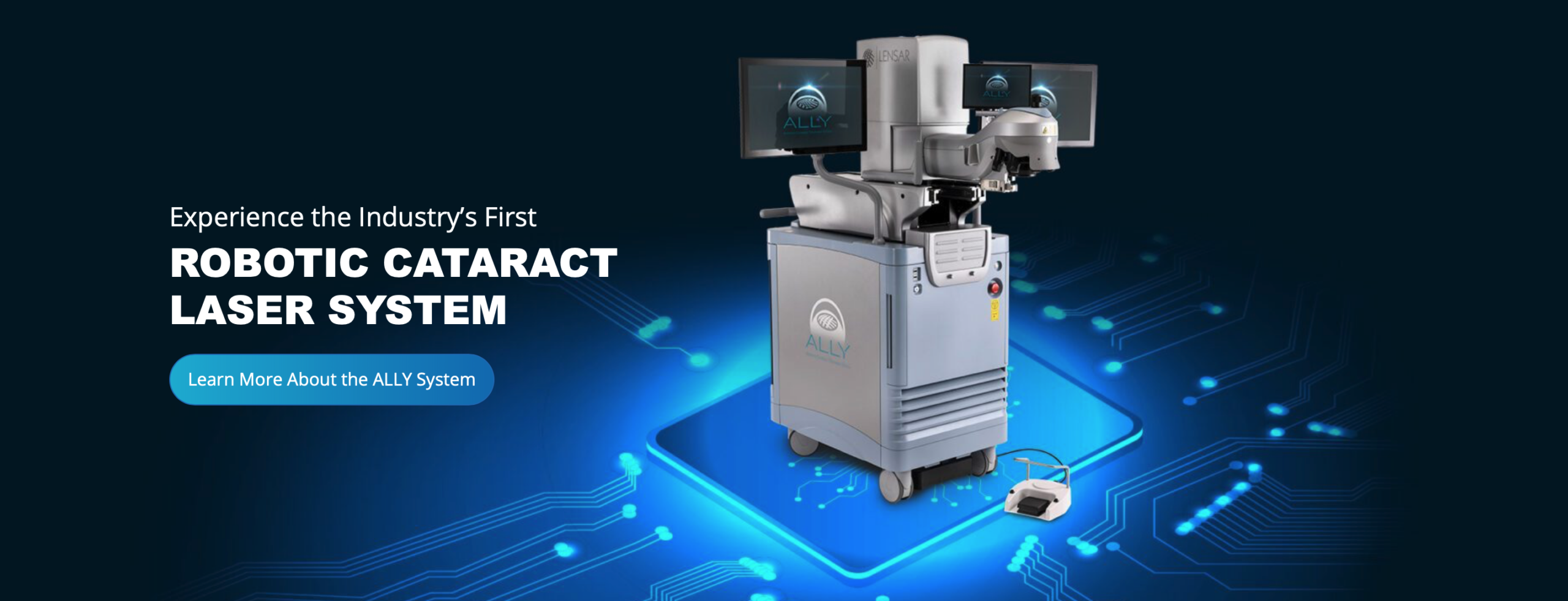
At Dominion Eye Associates, we offer advanced cataract surgery using the LensAR ALLY Robotic-Assisted Cataract Laser System™, a next-generation technology designed to combine your surgeon’s expertise with robotic intelligence, detailed imaging, and laser precision.
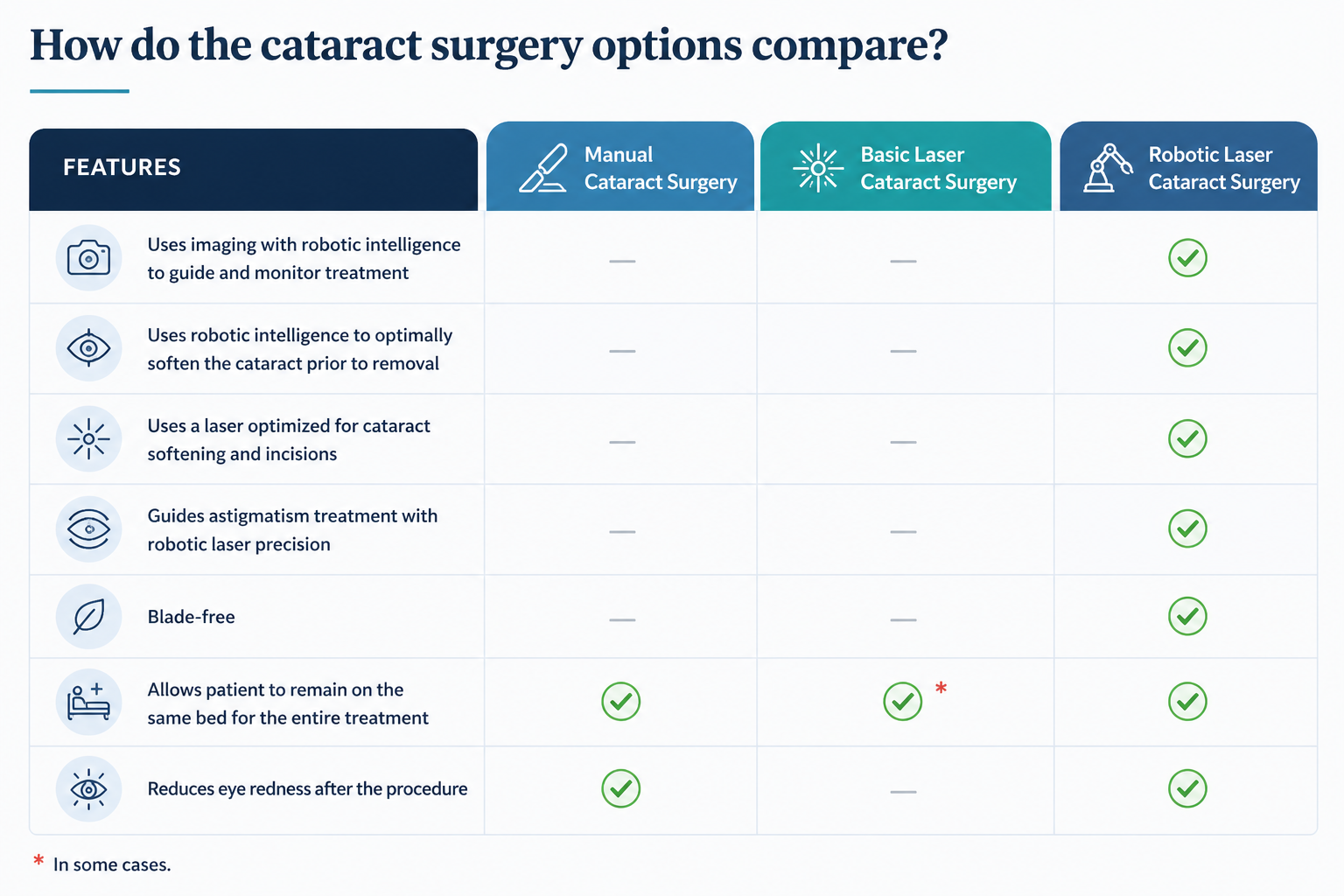
Robotic-assisted laser cataract surgery can help remove clouded lenses, support accurate intraocular lens placement, and treat astigmatism when appropriate—all with a blade-free laser approach.
Schedule your cataract consultation today!
What Is Robotic-Assisted Laser Cataract Surgery?
The laser is used to:
-
Create precise corneal incisions
-
Gently break up the cloudy cataract
-
Improve the accuracy of lens placement
This advanced technology enhances safety, consistency, and visual outcomes—often leading to faster recovery and improved vision.
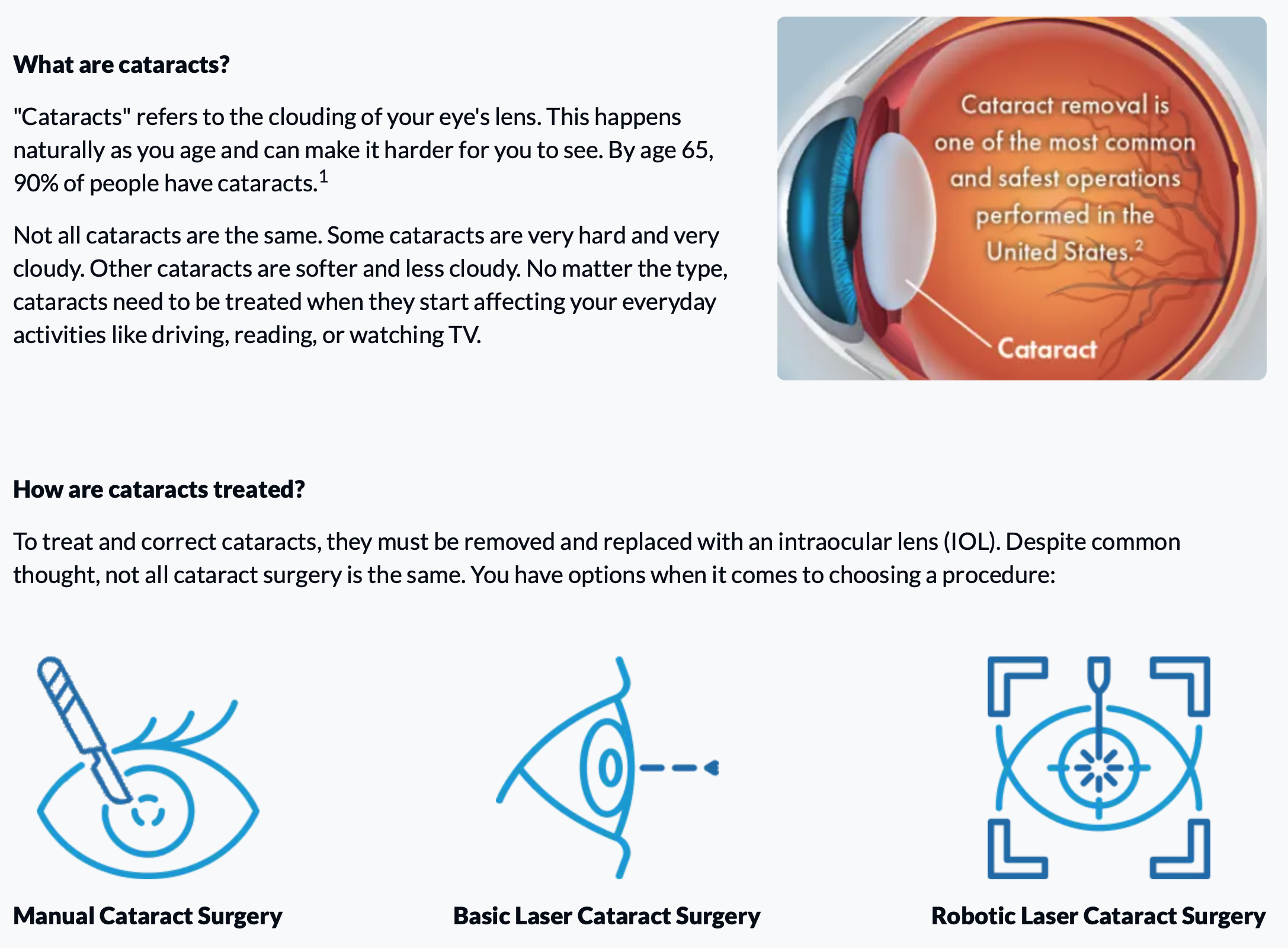
What Is LensAR ALLY Robotic-Assisted Cataract Surgery?
LensAR ALLY robotic-assisted laser cataract surgery uses advanced imaging and robotic laser technology to help your surgeon plan and perform key steps of cataract surgery with exceptional precision. The ALLY System is intended for cataract surgery, including anterior capsulotomy, cataract lens fragmentation, and corneal incisions.
Instead of relying only on handheld instruments, the robotic laser can help:
- Create precise corneal incisions
- Soften and fragment the cataract
- Support accurate lens positioning
- Guide astigmatism treatment when needed
- Provide detailed imaging and real-time monitoring during treatment
Schedule your cataract consultation today!
Premium Lens Options: See More Clearly Than Ever
Today’s cataract surgery is not just about removing a cataract—it’s about customizing your vision. Dominion Eye Associates offers a full range of advanced intraocular lens (IOL) options, including:
-
Monofocal lenses – Clear vision at a single distance
-
Toric lenses – Correct astigmatism for sharper vision
-
Multifocal lenses – Improve vision at near, intermediate, and distance ranges
-
Extended Depth of Focus lenses – Provide a continuous range of vision with fewer visual disturbances
Your surgeon will help you choose the lens option that best matches your visual needs, lifestyle, and goals.
What to Expect During Your Cataract Surgery Experience
Cataract surgery is one of the most commonly performed and successful procedures in medicine.
-
The procedure typically takes about 15 minutes per eye
-
Your eye is numbed for maximum comfort
-
Most patients experience little to no discomfort
-
Vision often improves within days
Surgery is performed in our state-of-the-art Surgery Center, staffed by a highly trained team dedicated to your comfort and care.
Schedule your cataract consultation today!
Recovery and Results
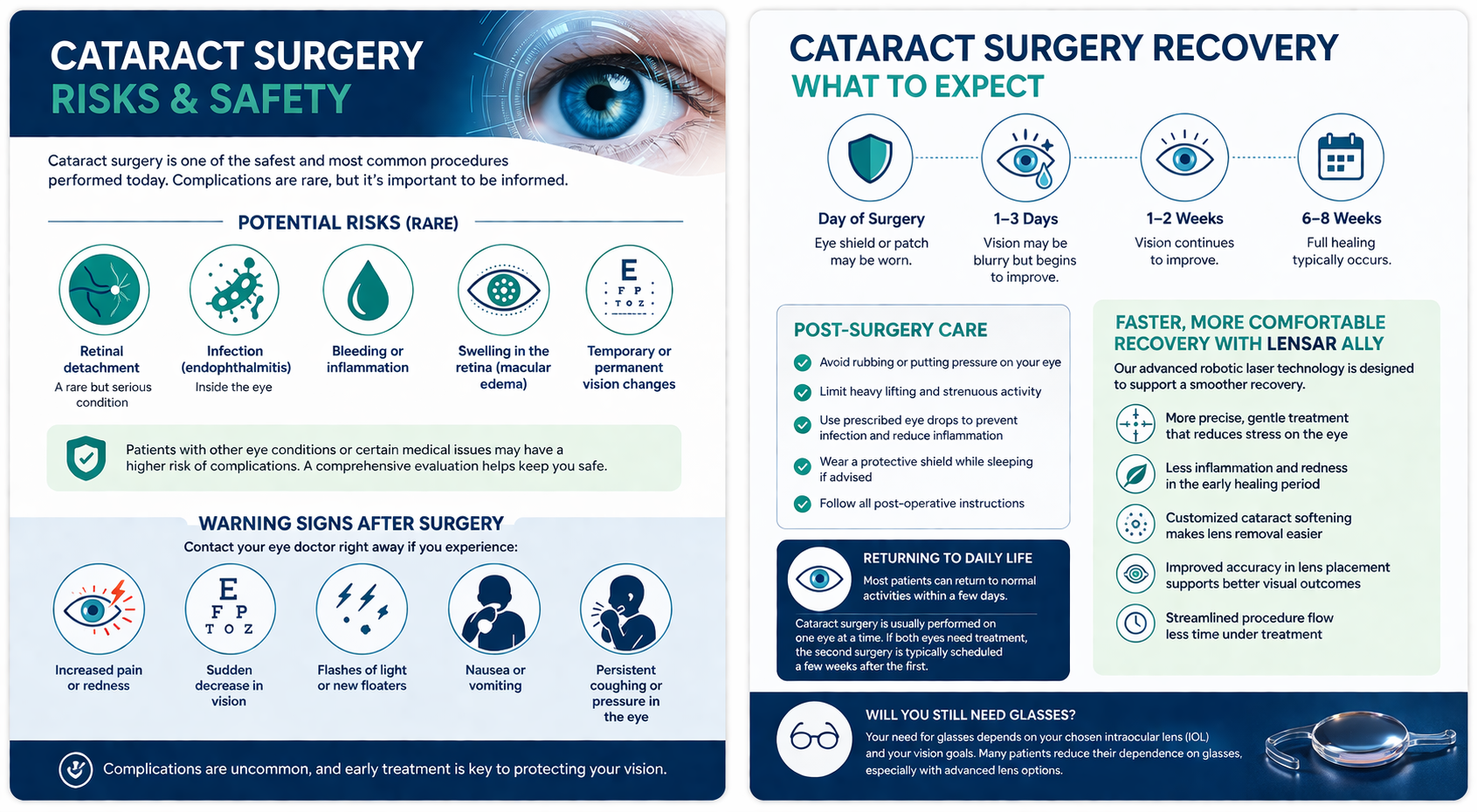
Recovery from laser cataract surgery is usually quick and smooth. Many patients notice clearer, brighter vision shortly after surgery, with continued improvement over the following weeks. Most return to normal activities shortly after surgery, following their surgeon’s post-operative instructions.
Frequently Asked Questions
What is LensAR ALLY robotic-assisted laser cataract surgery?
It is an advanced cataract surgery technology that uses robotic intelligence, detailed imaging, and laser precision to assist your surgeon with key steps of cataract removal and lens replacement.
Is robotic laser cataract surgery blade-free?
Yes. Robotic-assisted Laser Cataract Surgery uses laser precision rather than handheld blades for certain steps of the procedure.
Can robotic laser cataract surgery help with astigmatism?
Yes, when appropriate. The ALLY system can help create a precise plan for astigmatism treatment and uses laser marks instead of manual ink marks to guide treatment.
Will I still need glasses after cataract surgery?
That depends on your eyes and the lens option you choose. Premium lens options may reduce dependence on glasses for some patients.
Does insurance cover cataract surgery?
Traditional cataract surgery is often covered by Medicare and many insurance plans. Advanced laser technology and premium lenses may involve additional out-of-pocket costs.
Schedule your cataract consultation today!